
Game Theory in Poker and Esports Betting: Strategy Overlap Explained
No Attribution Required
Where Poker Logic Meets Esports Market Reading
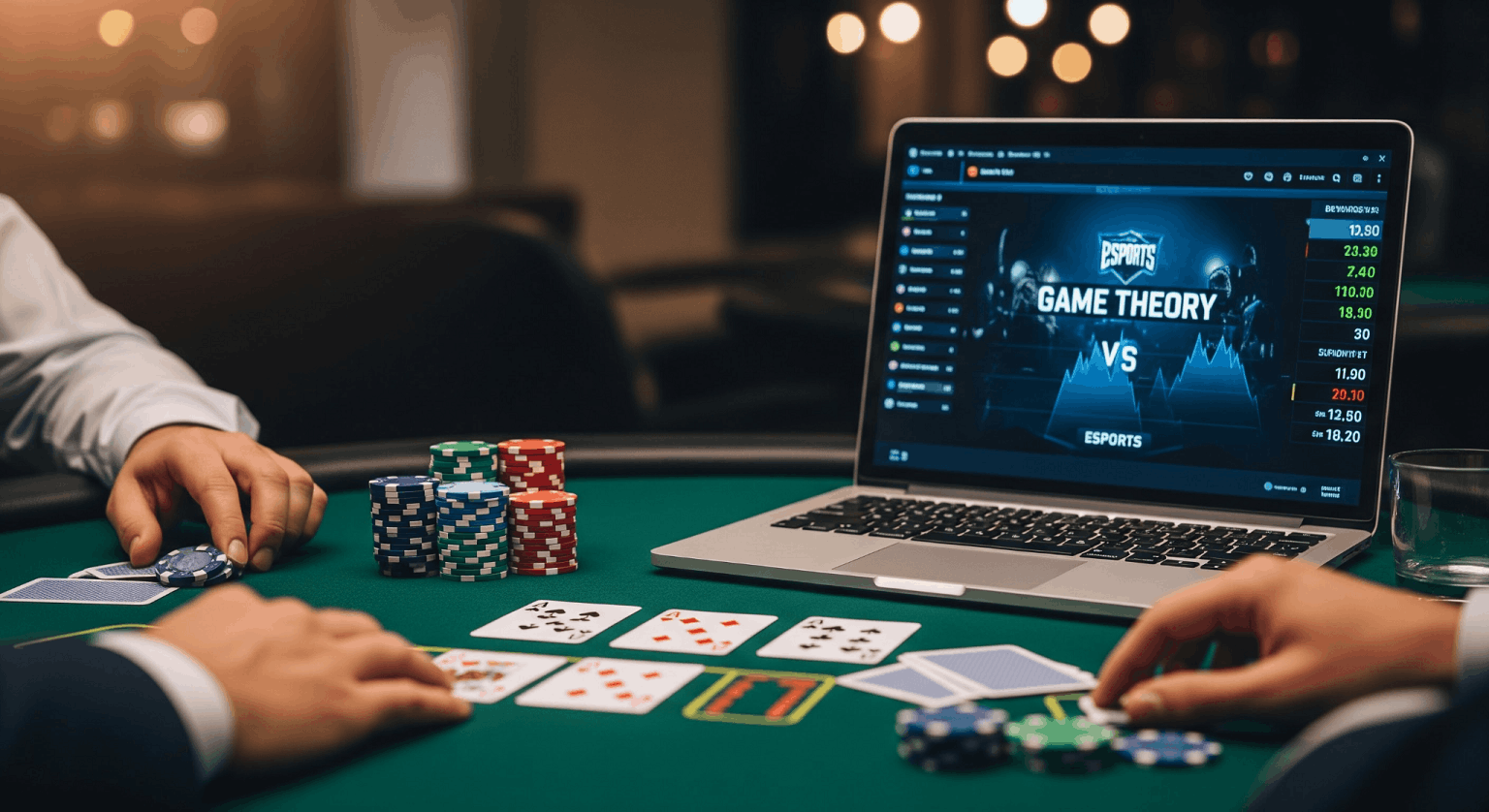
Poker and esports look entirely different until the decision tree appears. Both disciplines reward players who understand incomplete information, pressure, position, timing, and the cost of predictable behavior. A poker hand hides cards; an esports map hides intent, cooldown timings, economy plans, and opponent adaptations. The overlap is not romanticized – it is mathematics under stress.
Finnish followers of competitive gaming often bring the same disciplined eye they use for hockey systems and football tactics. They study player careers, team roles, map tendencies, and national-team storylines before treating a market as readable. In that analytical routine, esports betting becomes less about guessing a winner and more about pricing uncertainty in an adult entertainment setting. The responsible bettor still needs bankroll control, bookmaker margin awareness, and a clear reason for every stake. A clever read loses value if the price has already moved.
Poker Starts With Range, Not Ego
Strong poker players do not put an opponent on one exact hand too early. They build a range: premium hands, medium holdings, bluffs, traps, and folds. That method transfers neatly to esports analysis. A Counter-Strike 2 team on a low economy has several plausible choices: a force buy, a partial investment, a full save, or a tactical gamble around utility timing.
The bettor’s task is not to predict the future with absolute certainty. It is to estimate which branches of the decision tree are most likely. That requires analyzing past data, but it also demands watching how teams behave when pressure changes.
The Esports Map Is a Betting Board
Game theory becomes visible when a team chooses where to spend its resources. In League of Legends, objective trading around dragons, Baron pressure, side-lane waves, and teleport timers creates strategic tension. High-stakes events, such as Riot’s MSI 2026 in Daejeon, serve as prime examples of elite formats creating dense, highly analytical data windows.
Strategic Concept Overlap:
Position
Esports Equivalent: Map control and vision
Betting Question: Who acts with more information?
Pot odds
Esports Equivalent: Objective trade value
Betting Question: Is the risk worth the reward?
Bluff frequency
Esports Equivalent: Fake pressure or rotation
Betting Question: Does the team sell a credible threat?
Tilt control
Esports Equivalent: Mental reset after a lost round
Betting Question: Does the roster stabilize quickly?
Bankroll discipline
Esports Equivalent: Stake sizing across events
Betting Question: Can losses be absorbed calmly?
.jpg)
Information Advantage Shrinks Quickly
Markets react faster in esports than casual viewers expect. Starting rosters, patch changes, side selection, map vetoes, and travel schedules can shift prices before the match even begins. Live betting markets add another layer of volatility, as a single pistol round or an early dragon can disproportionately distort public emotion.
Patch Notes Are the New Table Image
In poker, table image shapes how opponents respond. In esports, patch identity does similar work. A team that mastered one meta may lose its edge when champion balances, economy structures, or map geometry change. Analysts who ignore patch context often overrate yesterday’s form.
What Poker Teaches About Discipline
Poker punishes players who confuse aggression with intelligence, and esports markets do the exact same thing. A bettor who attacks every live swing usually pays the bookmaker's margin far too often. Selectivity matters much more than activity.
A practical decision routine should include:
- Defining the market before opening the bet slip.
- Checking whether the price moved before the reasoning became public.
- Separating map-specific strength from a team's general reputation.
- Avoiding stacking correlated bets without understanding the total exposure.
- Reviewing losing selections for process quality, not placing emotional blame.
Dota 2 Shows Why Multi-Layered Strategy Matters
Valve’s Dota 2 The International 2026 (the 15th-anniversary edition in China) serves as a clean game-theory laboratory. Drafts, lane matchups, smoke timings, Roshan control, and buyback status constantly reshape player incentives. A team might willingly concede territory if it guarantees a better timing window two minutes later.
This is where poker thinking shines. The obvious move is not always the correct one. A passive-looking sequence can actually be a trap, while a high-kill early game can still be strategically disastrous if the economy and map state ultimately favor the opposition.
Finnish Analysts Notice the Human Layer
The Finnish audience naturally respects slow, tactical storylines. Fans who follow Liiga line changes or national-team defensive structures are not shocked by the analytical depth of esports. They understand that role comfort and high-pressure decision-making matter just as much as raw mechanical skill.
The Best Edge Is Usually Boring
The strongest overlap between poker and esports is not a heroic, gut-feeling call. It is the mastery of controlled uncertainty. Good analysts fold bad prices, skip unclear markets, and avoid turning one sharp read into a reckless staking pattern. The daily work often feels dull – until you review your record after 200 calculated decisions.
Poker in Las Vegas
Poker in Barcelona
Poker in Rozvadov
Poker in London
Poker in Paris
Poker in Bratislava
List of World Poker Events
More interesting and useful articles from the world of poker you can read in our blog. Also search for poker clubs in the country or city, get to know about upcoming poker tournaments or cash games at PokerDiscover.com
If you liked the article, don’t forget to share it with your friend
* The content may include links to external sites relevant to the topic
* This article is for informational purposes only and does not constitute legal or financial advice
* Some content on this page may include promotional references to gambling services
* 18+ only. Please gamble responsibly